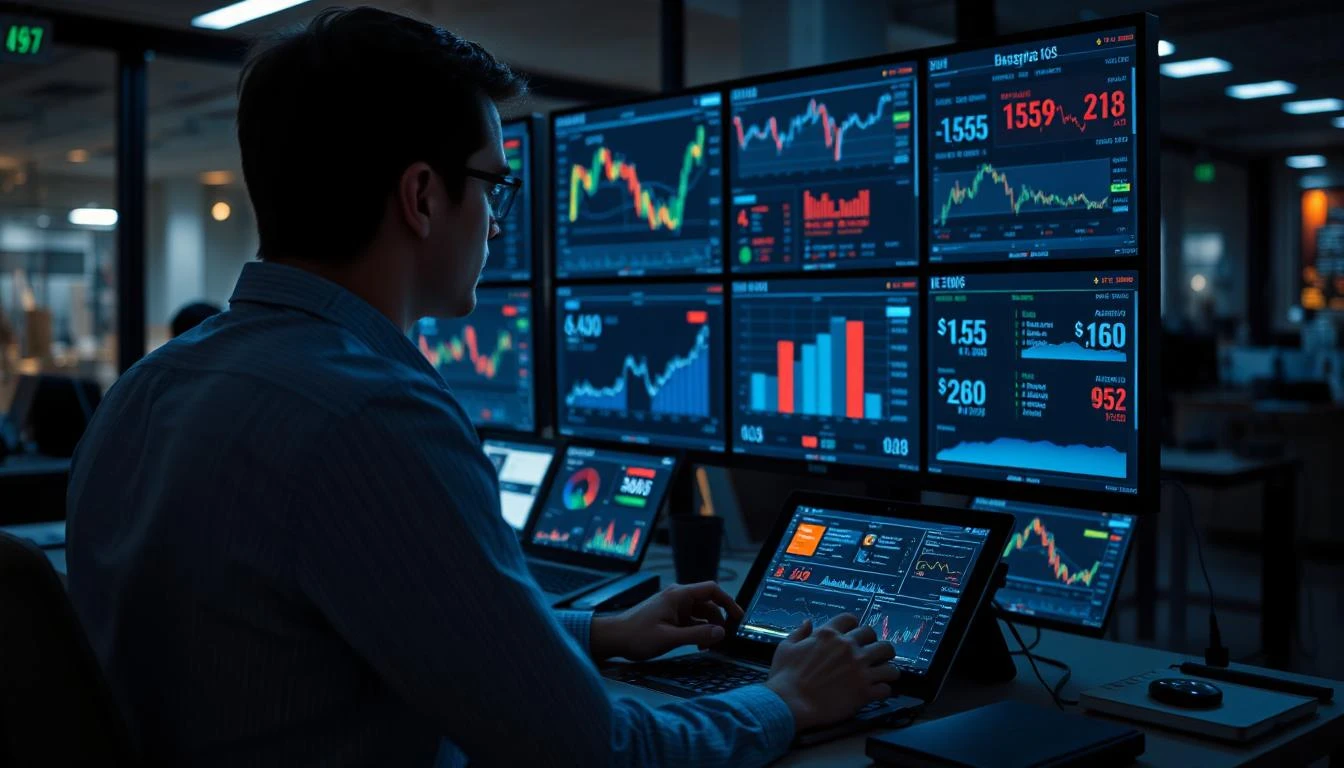
Why Traders Are Simplifying Their Systems

Markets never stopped evolving, but the way people react to them has changed dramatically. Traders once believed the strongest advantage came from adding more indicators, more charts, and more layers of confirmation. Today, that belief is being challenged. Across financial markets, a quieter shift is happening, the traders producing sustainable results are often the ones removing complexity instead of adding to it. They are focusing on clarity, speed of execution, and systems that remain effective even when conditions become unpredictable.
What makes this transition even more interesting is that simplification is not about doing less. It is about making better choices with fewer distractions. More market participants are turning to efficient trading decision methods because faster environments reward precision over information overload. Instead of chasing every signal, they build frameworks that help them recognize what truly matters and ignore what only creates noise.
Why Simplicity Is Becoming A Competitive Advantage
Complex systems can look sophisticated on paper, but markets rarely reward appearance. They reward execution. That is why more traders are redesigning their processes around fewer variables and clearer actions. One of the strongest emerging shifts behind this trend is simplified trader workflow optimization, where the goal is not to trade more but to trade with greater consistency and lower mental friction.
Reducing decision fatigue in trading
Trading decisions are rarely difficult because of a lack of information. More often, they become difficult because there is too much information competing for attention. Decision fatigue appears when traders continuously compare indicators, switch timeframes, monitor sentiment, and reinterpret conditions before taking action. Every additional layer creates hesitation.
Focusing on repeatable market execution
This mindset changes the objective entirely. The goal becomes less about predicting markets and more about executing decisions with confidence and structure. As trading educator Alexander Elder once emphasized, “successful traders focus on making quality decisions first because performance becomes a natural consequence of disciplined execution.”
Moving away from indicator overload
There was a time when adding indicators felt productive. More confirmations appeared safer. More dashboards looked more professional. Then reality arrived. Too many indicators often generate conflicting messages and delay action. Traders now increasingly remove overlapping tools and concentrate on a smaller number of meaningful variables.
Modern Trading Habits That Prioritize Efficiency
Modern trading habits are being shaped by efficiency rather than endless preparation. Markets move quickly, and attention has become one of the most valuable resources a trader has. The strongest systems today are designed to reduce wasted motion while increasing decision quality.
Data driven strategy selection
Strategies built on assumptions rarely survive changing market conditions. That is why traders increasingly rely on backtesting, execution logs, probability analysis, and measurable outcomes when evaluating performance. Data is no longer treated as validation after the fact. It becomes part of the decision process itself.
Shorter analysis and faster response
Long analytical sessions often create the illusion of preparation. In reality, markets continue moving while traders keep searching for one more confirmation. Shorter analysis cycles encourage action based on predefined conditions. This does not mean rushing. It means identifying information that changes decisions and eliminating information that does not.
Building systems around consistency
Consistency is often misunderstood as producing identical outcomes. In practice, consistency means maintaining the same quality of process regardless of results. Traders who build systems around consistency usually rely on routines, position management, and objective reviews instead of emotional adjustments. That consistency creates resilience when conditions become uncertain and prevents unnecessary strategic changes after short-term losses.
How Traders Adapt To Faster Market Conditions
Markets are becoming more reactive, more connected, and increasingly influenced by rapid shifts in information. Traders who adapt successfully are not necessarily predicting better. They are creating systems that remain usable under pressure.
Using automation without losing control
Automation continues to become part of modern trading, but complete dependency rarely becomes the objective. Alerts, scanners, and execution support tools reduce repetitive work while leaving final decisions in human hands. The strongest systems use automation to protect focus rather than replace thinking.
Risk management as the core framework
The traders who remain active long term often share one characteristic, they think about risk before opportunity. Risk management has evolved from a protective habit into the central framework that supports every trading decision. Position sizing, exposure limits, scenario planning, and capital preservation increasingly shape modern strategies. Investor Paul Tudor Jones once explained that “the most important rule is protecting capital first, because opportunities always return but depleted resources do not.”
Creating flexible trading routines
Rigid systems eventually encounter conditions they were never built to handle. Flexible routines allow traders to adjust without abandoning structure. This includes reviewing assumptions, retiring ineffective rules, and refining execution based on current market behavior. The most adaptable traders are often the least attached to being right.
Start Building A Simpler Trading Approach Today
If there is one question worth carrying into your next trading session, it is this, are your tools helping you decide, or are they delaying your decisions? Many traders spend years searching for the missing indicator while overlooking the possibility that nothing is missing at all. Sometimes performance improves not when complexity increases, but when unnecessary layers disappear. The strongest trading systems are not always the most impressive to look at. They are often the easiest to repeat, the easiest to evaluate, and the easiest to trust when markets become uncertain. Start simplifying where complexity no longer creates value. Small changes in process can reveal bigger changes in results.